🔬
Scientific Thinking
Students explore plant biology and experimentation through hands-on growing.

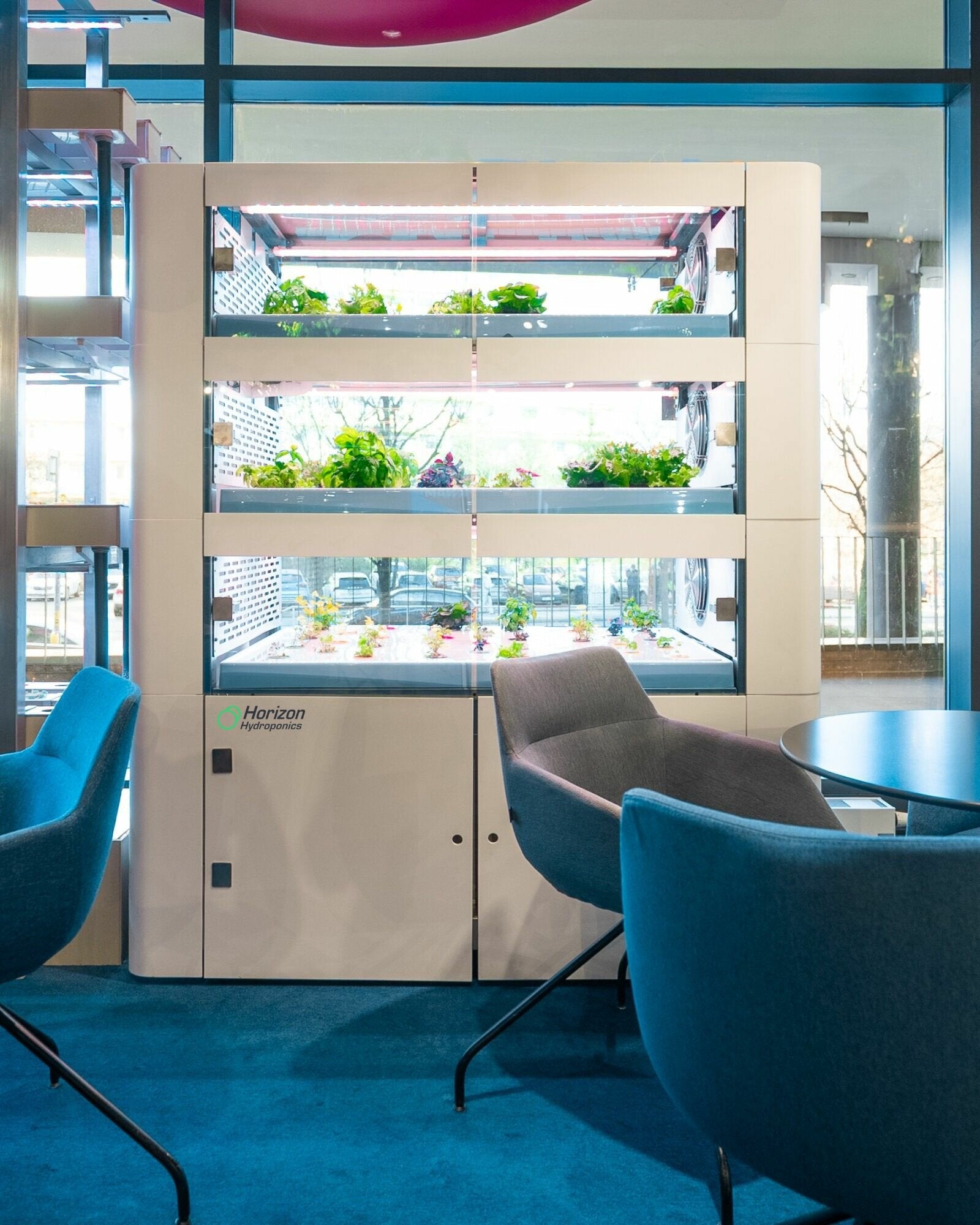
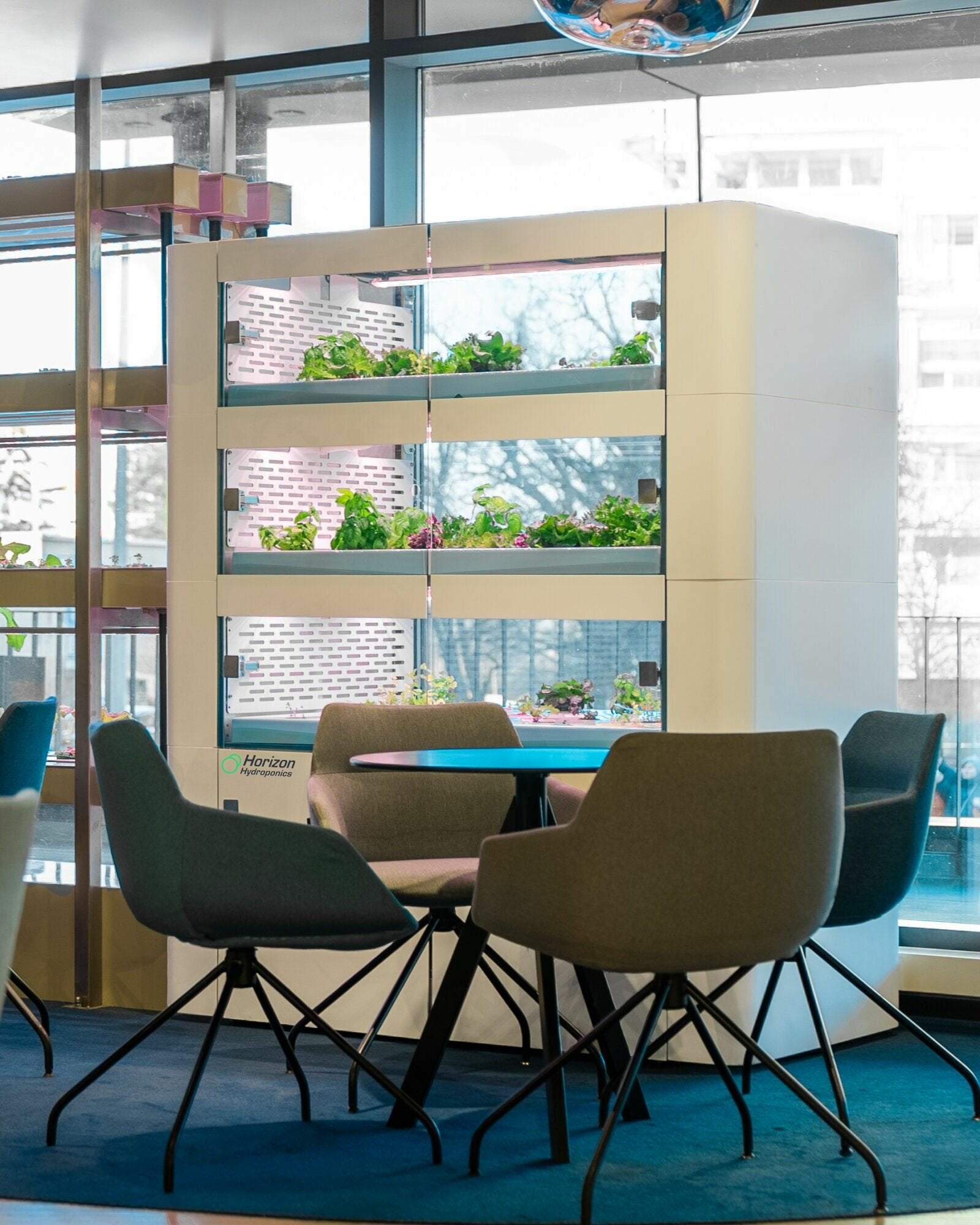
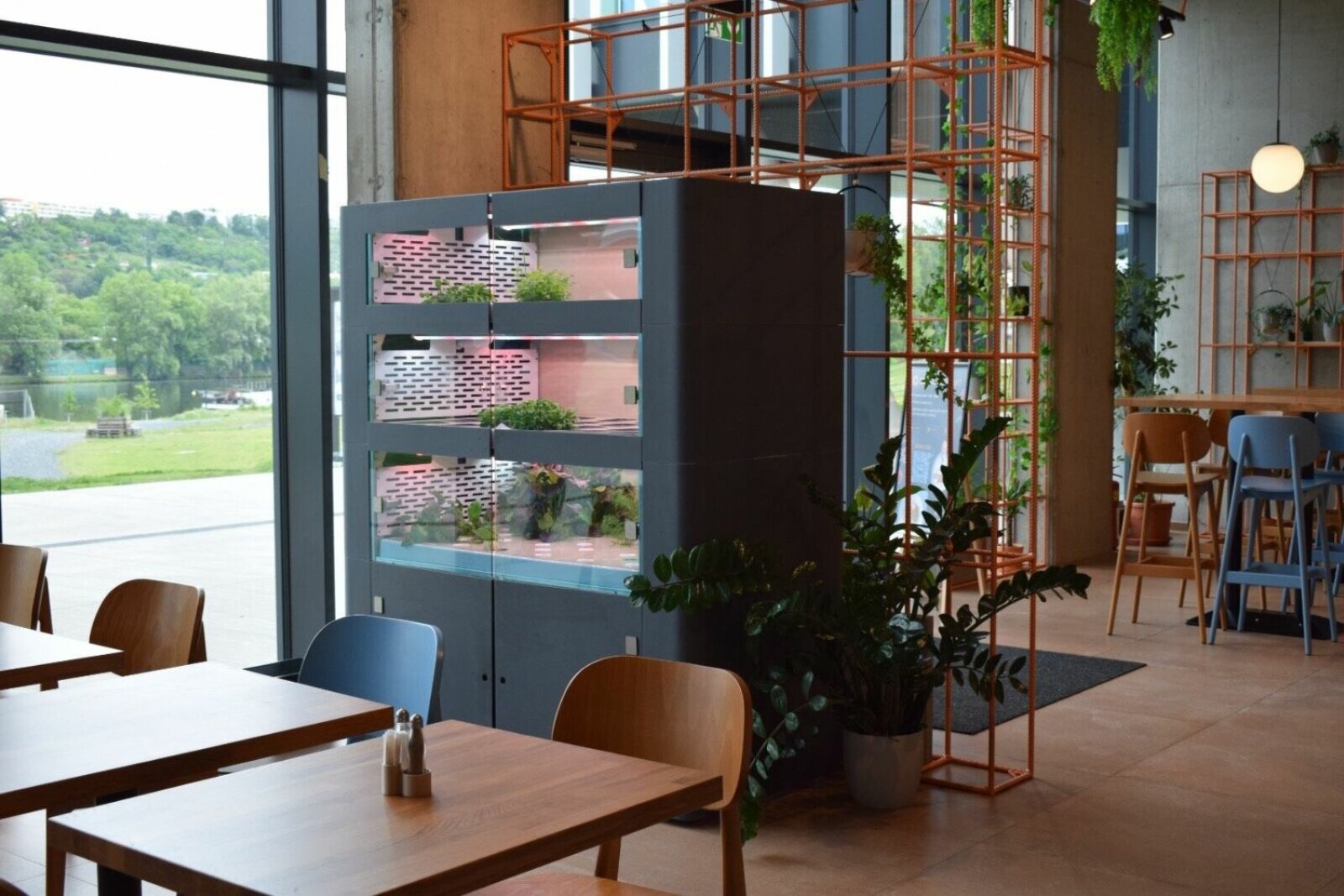
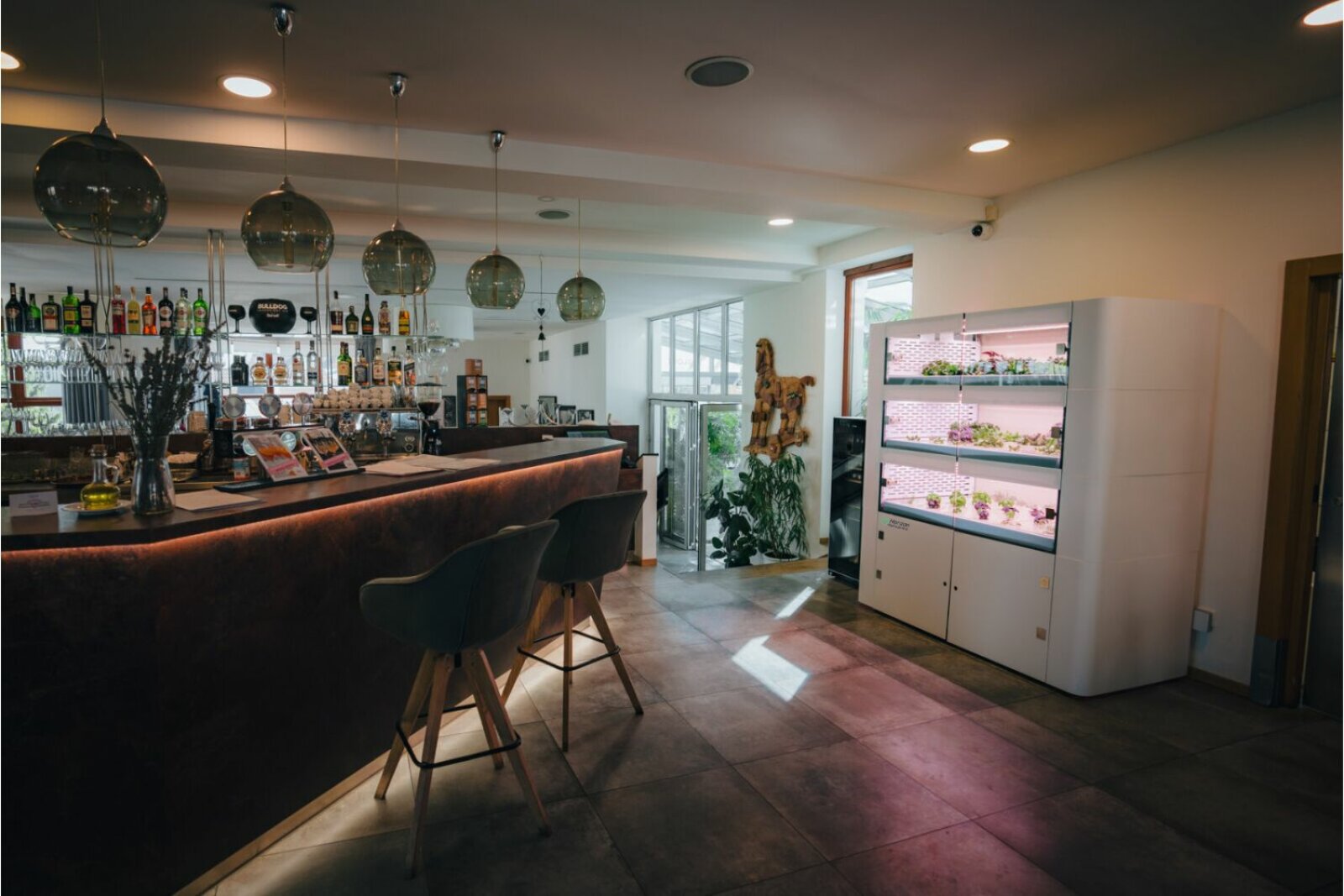
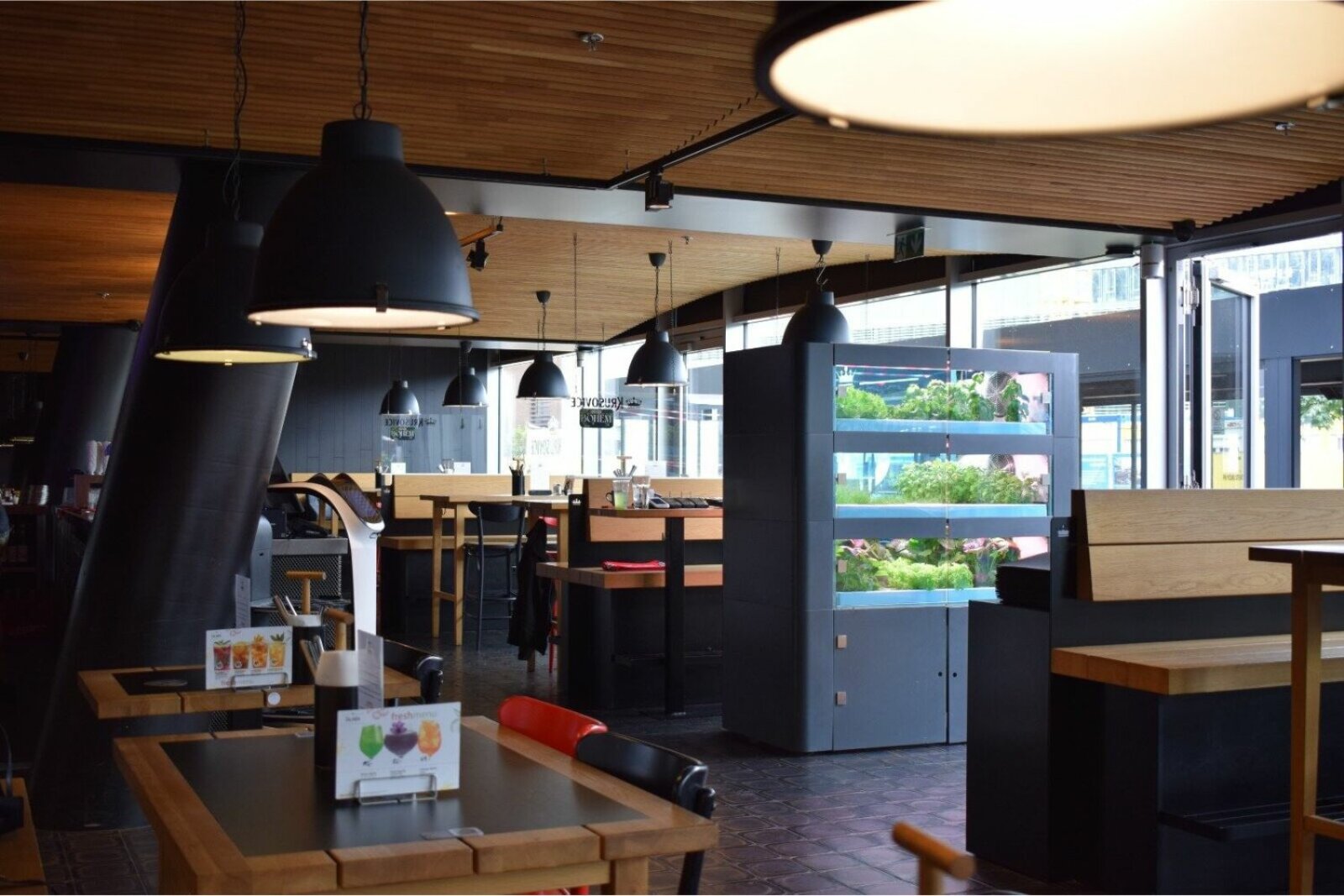
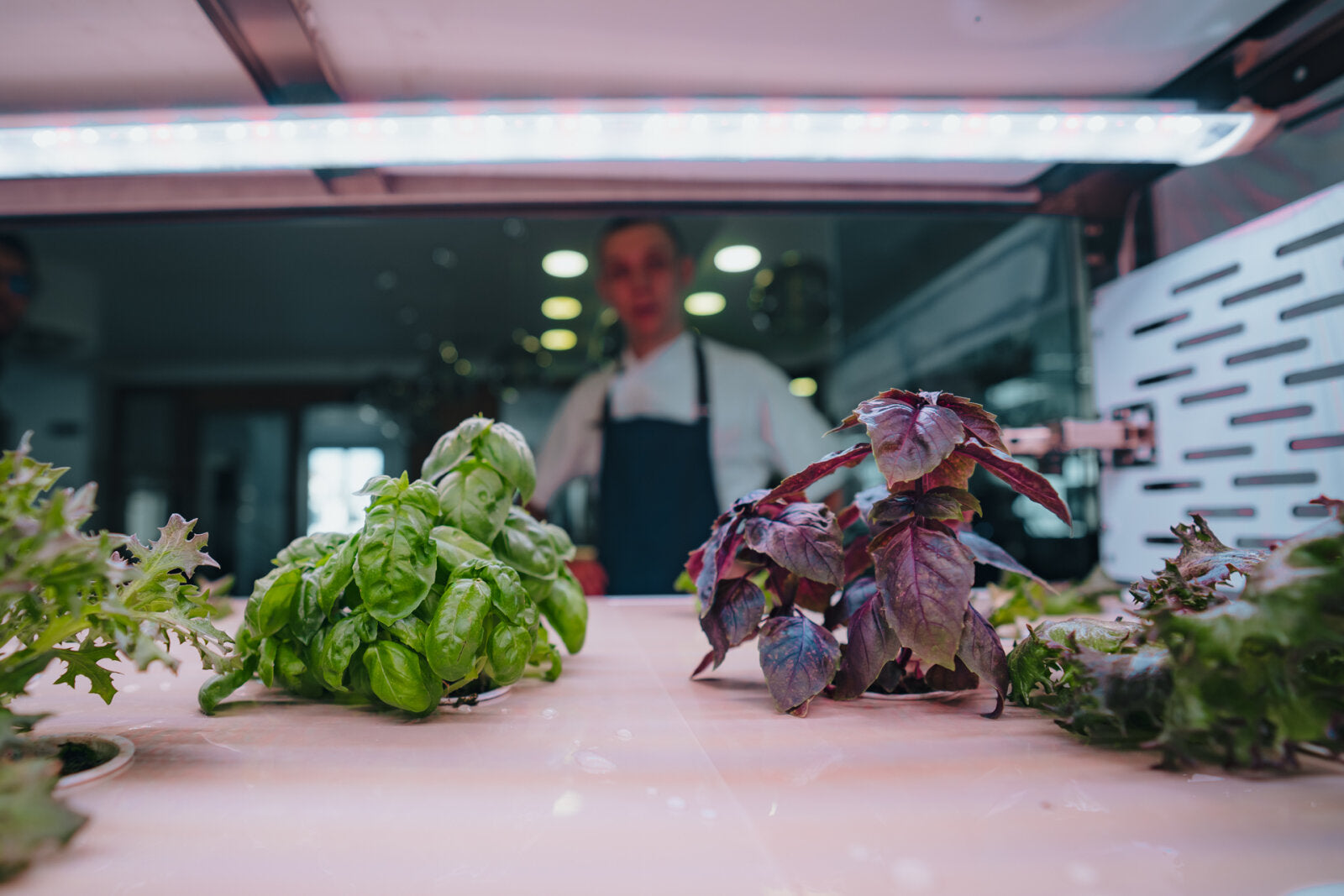
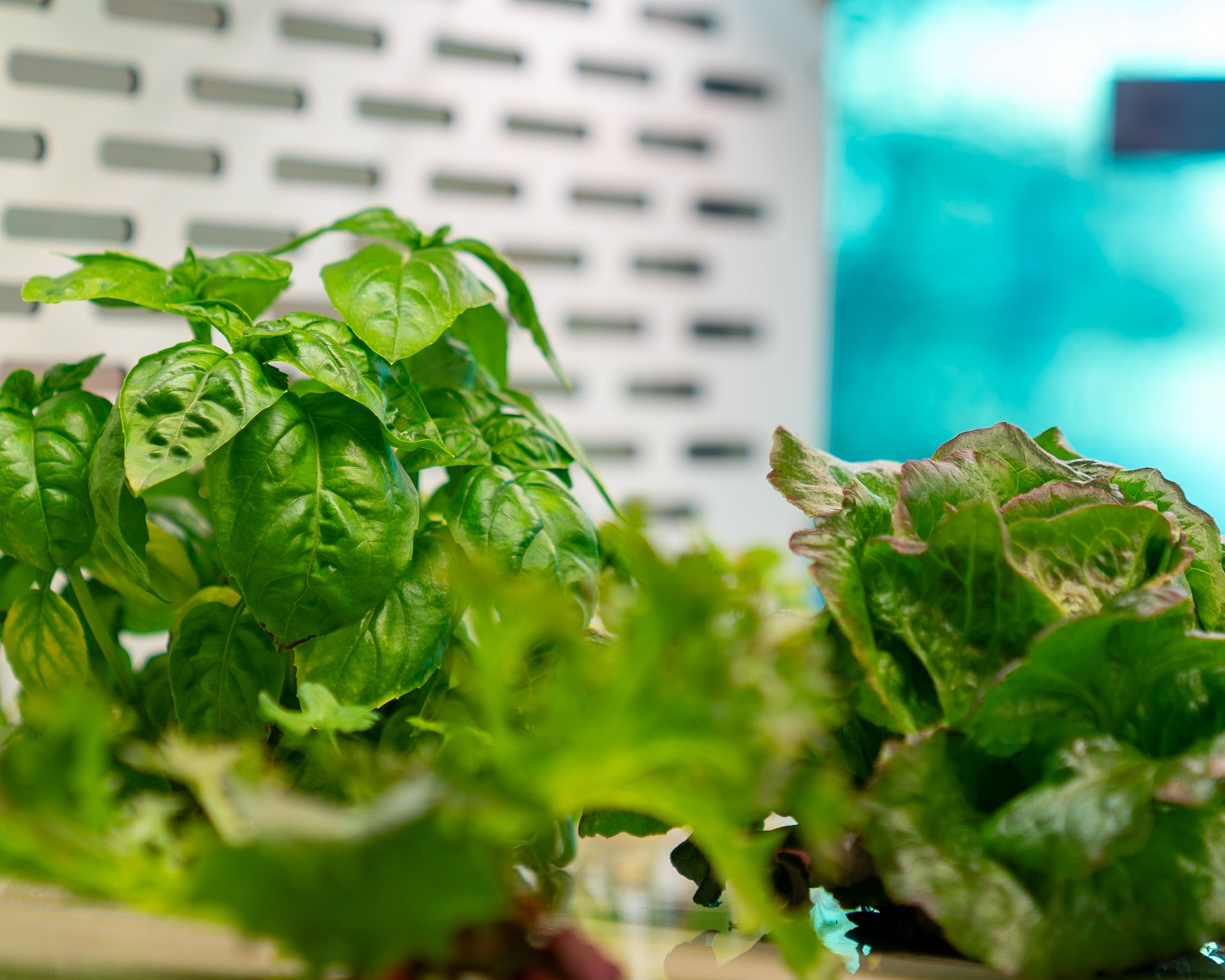
The Horizon HydroFarm gives students the tools to explore plant science, sustainability, and data-driven learning by growing real crops indoors. With built-in sensors and app integration, students can track growth conditions in real time, run experiments, and connect their findings to core STEM subjects - all within a compact, ready-to-use system.
Students explore plant biology and experimentation through hands-on growing.
Live sensor data helps students measure, compare, and understand change.
Learners connect classroom science to real-world food and climate challenges.
Choose options
Students use the Horizon HydroFarm to experience first-hand how plants grow in a soil-free, hydroponic system. They start by planting seeds in the unit and preparing the system with water, nutrients, and light.
As the plants grow, students can adjust variables like nutrient concentration or light intensity and immediately observe the impact on growth. Throughout the process, built-in sensors provide real-time data on temperature, humidity, and water levels, allowing students to link what they see with measurable science.
By the end, learners don’t just watch plants grow, they build a deeper understanding of biology, sustainability, and the science behind food production.
With the Horizon HydroFarm, students don’t just grow plants - they monitor and measure every stage of the process. The system’s built-in sensors track conditions such as temperature, humidity, water level, and light intensity, giving students a live stream of scientific data to analyze.
Using the connected app, they can graph changes over time, compare different variables, and even export results for classroom discussions or projects. This transforms the growing process into a data-driven experiment, where students learn the difference between raw and interpreted data, practice scientific observation, and develop critical thinking skills.
By making invisible processes measurable, the HydroFarm turns plant growth into a powerful, real-world STEM learning experience.
The Horizon HydroFarm is designed to seamlessly integrate into classroom teaching across multiple subjects.
In biology, students can explore photosynthesis, plant anatomy, and ecosystems by observing real growth in action. Chemistry lessons can dive into nutrient composition, water pH, and the role of minerals, while physics classes can examine light spectra, energy efficiency, and closed-loop systems. Mathematics and data science are reinforced as students plot growth curves, analyze trends, and compare experimental results.
Beyond STEM, the HydroFarm supports discussions in geography and environmental studies, linking classroom experiments to global challenges such as food security and climate change. This versatility makes it a valuable tool that teachers can adapt to their curriculum year after year.

Video
A typical growing cycle:
Fast results. Visible progress. Edible outcomes.
The Horizon Hydroponic Farm is supported by a smart companion app available on desktop and mobile.
With the app, users can:
No expertise required — the system teaches you as you grow.
Hydroponics works best when everything works together.
That’s why Horizon uses a monthly subscription model that removes complexity and risk.
Each month you receive:
This ensures consistent results, cycle after cycle.
Typical crops include: basil, dill, parsley, romaine lettuce, and other rotating varieties.
Compact footprint. High yield. Designed to fit where people already are.


